
Absolut Ads: How Two Words Changed Advertising
New York, 1981.
Flip through any magazine back then and the liquor ads all blurred together: glossy people at glossy parties holding glossy glasses.
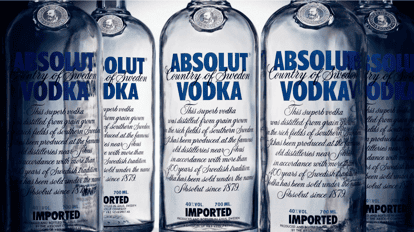
Then a Swedish vodka arrived, its shape inspired by an antique apothecary bottle. There was no fancy label or paper sticker, just the words printed straight onto the glass.
That Swedish vodka? That was Absolut. It had crossed the Atlantic in 1979; convinced America was the place where a premium vodka could really shine.
Say less: the two-word Absolut ad
Now Absolut needed to introduce itself to America, and that meant finding the right ad agency. The brief, the instructions every agency had to work from, was simple: nothing that looked like a typical alcohol ad, no vodka on ice, no people having drinks in bars.
After two weeks of pitches, with as many as ten agencies presenting in a single day, the account went to TBWA, an agency founded in 1970 by four ad men: an American, an Italian, a Frenchman and a Swiss. And it all came down to a single idea.
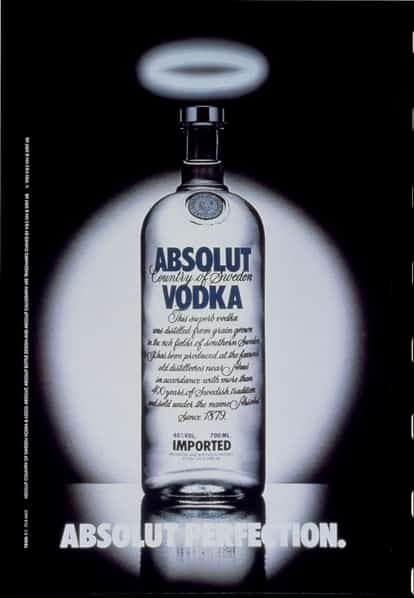
The idea came from TBWA’s art director, doodling bottles at home one night in front of a TV re-run. He drew a halo over the bottle and wrote “Absolut. It’s the perfect vodka.”
His copywriting partner asked: why not cut it to just two words? ABSOLUT PERFECTION became the very first Absolut ad, published in 1981.
Another early sketch gave the bottle wings and called it ABSOLUT HEAVEN. When it ran as a full page in The New York Times, the space had been bought on standby to save money, so the paper chose where it went. It ended up directly opposite the obituaries.
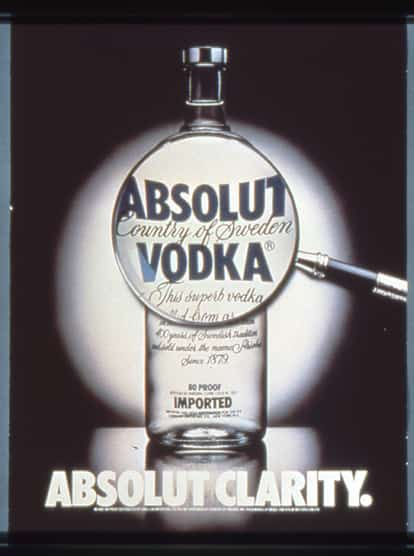
In a world of busy, wordy ads, the creative leap was knowing what to leave out. There were no models, no celebrities and no lifestyle fantasy, just a bottle and two words that trusted you to get it. People did. Every ad was a little puzzle, and every puzzle had the same answer.
Run enough of those and something strange happens. The bottle stops being a bottle and becomes a shape your brain recognizes before you’ve read a word. That led to a pretty risky question…
What if we took the bottle out?
Imagine sitting in that meeting. Years had gone into teaching people to recognize this bottle, and now the idea on the table was to stop showing it.
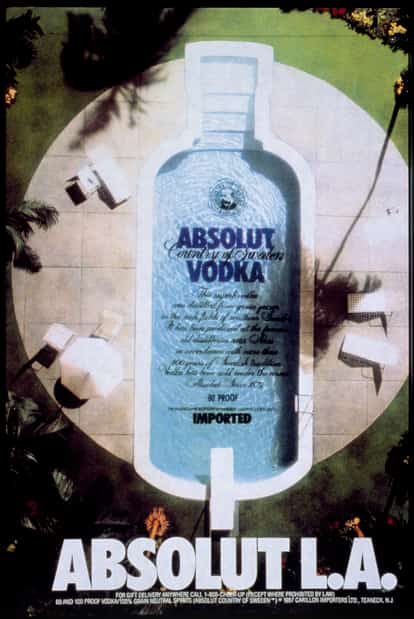
That’s exactly what happened. By 1983, some Absolut ads had swapped the real bottle for other things in its shape.
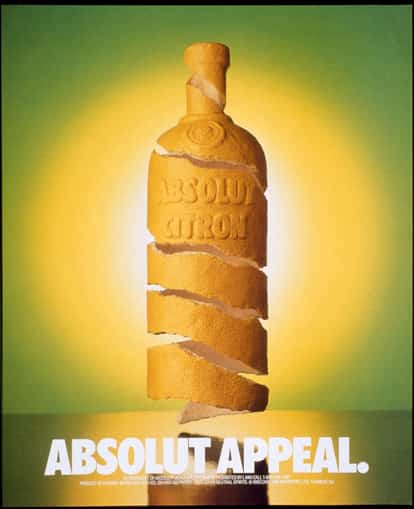
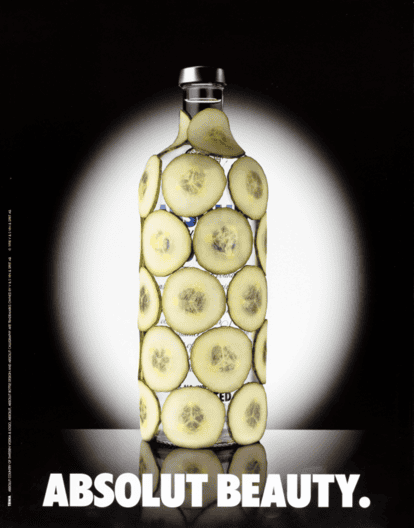
It worked, because by then people didn’t need the bottle anymore. They knew the silhouette and they knew the two-word headline, so anything bottle-shaped with “ABSOLUT” in the caption was enough for their brains to fill in the rest. From that point on, the ads felt less like ads and more like a game people wanted to play.
And one of the most famous artists in the world was about to join in.
How Andy Warhol turned the Absolut ads into art
There are plenty of stories about how Absolut and Andy Warhol first met. One of them starts with a magazine. In the early 80s, Absolut was one of the biggest advertisers in Interview, the style bible Warhol had founded, running around 24 pages of ads a year. That’s how Absolut first got to know Warhol, back in 1983.
Warhol started out as a commercial artist, and he always had an eye for great packaging. He was a big fan of the Absolut bottle, and he even joked that he dabbed Absolut on his neck like cologne. So, in 1985, Absolut asked him to paint it. He painted it in black against a gold background, with lettering in blue, purple and pink. The ad was called ABSOLUT WARHOL so nobody would miss who made it.
It ran in the world’s leading fashion and art magazines, and every major newspaper covered it. Warhol was keen to do more, but Absolut wanted his painting to stay one of a kind, so he introduced the brand to other artists he knew instead.
Over the years, these partnerships grew into the Absolut Art Collection, with more than 850 works by more than 550 artists, now housed at Spritmuseum in Stockholm.
Absolut cities
Artists had shown the bottle could be anything. Next, it went everywhere.
In 1987, ABSOLUT L.A. kicked off a series of city ads with a swimming pool shaped like the bottle, surrounded by palm trees in the California sun. It looked completely real, but the whole scene was a miniature model built just for the shot.
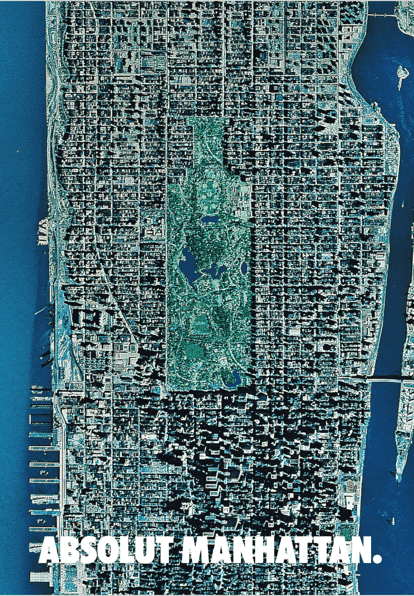
Then came New York. ABSOLUT MANHATTAN was an aerial photo of the city, where the green rectangle of Central Park formed the outline of the bottle. To get the shape just right, part of the East Side quietly disappeared from the picture.
After the ad ran, New Yorkers excitedly called in to say they’d spotted their apartment buildings in it. They hadn’t. Those blocks had been cut out.
Around two dozen cities got the treatment, and before long, people treated them like major sports teams. Having your own Absolut ad meant your city had arrived.
Let the bottle become something else: Absolut in fashion and culture
From city streets, the bottle stepped onto the runway. In February 1988, the fashion world wanted in on the game.
Absolut’s fashion story started in February 1988 with a single ad: a model in a metallic mini dress, the Absolut logo printed across the chest. In that ad, the model was our bottle.
People loved it. Nearly 5,000 of them phoned in to ask where they could buy the dress, but it was never put into production. Instead, that one photograph kicked off a project that ran for years, doing for fashion what we had already done with art.
Things got very glamorous from there. Celebrated photographers, models and designers took part. The pieces were never meant to be mass-produced, so they could be as theatrical as the designers liked, made for a dream world rather than everyday life.
Most of those pieces stayed out of public view for decades, until Spritmuseum finally put them on show in its exhibition Fashion Cocktail, from June 2021 to January 2022.
Musicians joined in too. For more than 40 years, working with renowned artists, musicians and designers has been at the heart of what Absolut does. Over the decades, artists from rock to dance music to pop have put their own spin on the bottle, and some of the newest collaborations go right back to where it all started, reimagining that famous silhouette for a new era.
Whatever corner of culture you looked in, the bottle had found its way there.
Show up for your people: Absolut and the LGBTQ+ community
In 1981, Absolut became the first spirit brand to advertise in LGBTQ+ magazines like The Advocate, at a time when working with the LGBTQ+ movement was still seen as controversial.
Over the years, Absolut launched the first spirits bottle to wear the rainbow flag, created with Gilbert Baker, the designer of the original flag. The rainbow bottle is now a permanent part of the range.
In 2020, the Absolut Love bottle took ink from racist and anti-LGBTQIA+ signs collected at rallies around the world and turned it into a bottle of love. We’ve been part of the community since 1981, and we’re not going anywhere.
Why Absolut ads still inspire creatives
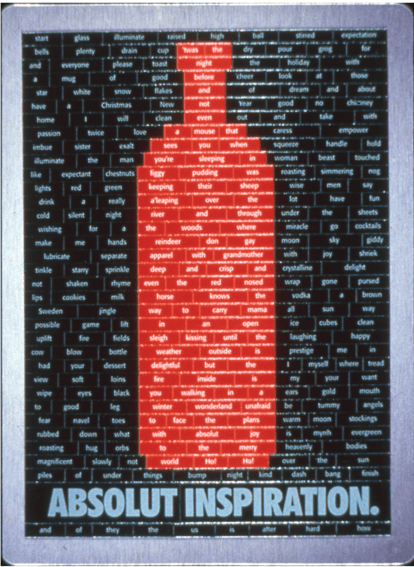
If you want to see the story up close, head to Stockholm. Spritmuseum’s exhibition ABSOLUT ABSOLUT tells the whole tale, from a simple sketch to a bottle the whole world recognizes. The exhibition includes 150 unique items on loan from the Absolut archive, ranging from bottles and fashion to publications and advertising props.
The museum is also home to the Absolut Art Collection: more than 850 works by over 550 artists, all invited to reimagine the bottle in their own way.
The ads may have been retired, but the bottle is still a blank canvas. It started with a doodle, a halo and two words, and every new collaboration adds another chapter.
EDITORIAL PICKS:
ABSOLUT® TABASCO™: The Creative Story Behind the Volcano Ad
Oct 28, 2026
Read more
Absolut Tomorrowland 2026: A New Limited Edition Bottle Collection
May 8, 2026
Read more
Celebrating World Bartender Day with Two of Stockholm’s Best Bars
Feb 24, 2026
Read more